Nostalgic Reflection: G.I. Joe – “Worlds Without End” Part 1 & 2 (1985)
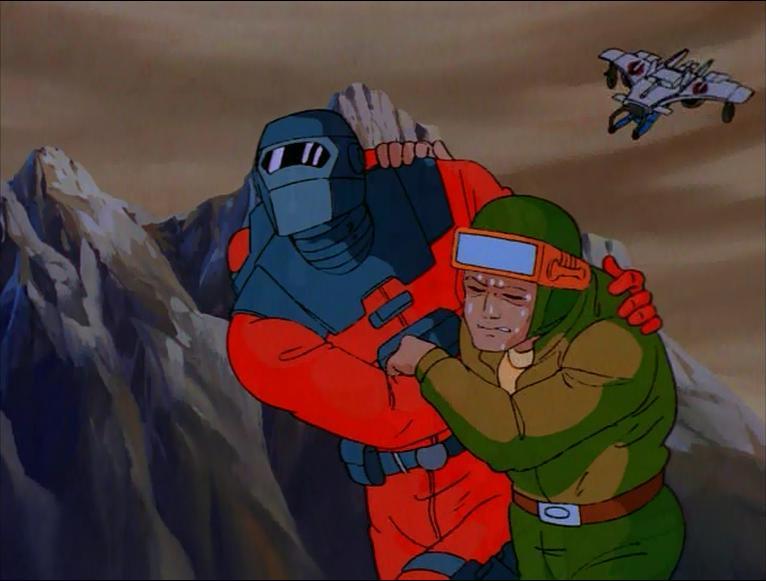
For fans of the classic G.I. Joe: A Real American Hero cartoon, few episodes left a deeper emotional impact than the two-part saga “Worlds Without End.” First airing in 1985, this storyline pushed the boundaries of what a children’s animated series could explore, blending science fiction with psychological drama and a surprisingly mature tone. Even today, nearly 40 years later, it stands as one of the most memorable and haunting entries in the series.
The Premise That Shook Us
The episodes begin innocently enough—another skirmish between G.I. Joe and Cobra over an experimental device. But things take a wild turn when the Joes activate a dimensional transport device and find themselves in a parallel universe where Cobra has already won. The G.I. Joe team is scattered and disoriented, their headquarters is in ruins, and the United States is under Cobra rule.
As a kid, this twist was absolutely mind-blowing. We were used to the black-and-white simplicity of good guys vs. bad guys, but “Worlds Without End” challenged that. It asked: What if the bad guys actually won? The very idea was unsettling, especially for young viewers. Cobra had always been buffoonish, but here, they were truly terrifying, lording over a dystopian world with military police, surveillance, and fear.
Emotionally Charged Storytelling
One of the most unforgettable scenes is when the Joes stumble upon the mass graves of their counterparts, complete with dog tags. Seeing characters like Steeler, Clutch, and Grunt come face to face with their own mortality was harrowing. These weren’t nameless victims—these were heroes, people we knew and loved. The image of Steeler finding his own grave is seared into the memory of any fan who watched it. It was one of the first times many of us as children grappled with the idea of death, loss, and existential purpose through a cartoon.
This is where “Worlds Without End” shines: it wasn’t just action-packed—it was philosophical. Steeler, in particular, begins to question his role and whether fighting endlessly against Cobra is even worth it. By the end of the story, he decides to stay behind in the alternate universe, choosing to help liberate it rather than return home. That choice added real weight to his character arc. It was poignant and bittersweet—and made even more impactful by the fact that those characters were essentially written off the show after this episode, their stories given a meaningful conclusion.
Visuals, Voice Work & Legacy
The animation, while still within the Sunbow production limits, is filled with gloomy skies, wrecked cities, and Cobra propaganda. The art direction plays heavily into the episode’s dystopian tone. The voice acting—particularly by Michael Bell (Duke), Neil Ross (Shipwreck), and B.J. Ward (Scarlett)—elevates the emotional beats with authentic delivery.
Even rewatching it now, as adults, the story holds up. The themes of fascism, free will, and sacrifice resonate more deeply with age. For many of us who grew up with G.I. Joe, “Worlds Without End” was a moment where the series stopped being just a toy commercial and became something greater. It dared to ask hard questions and let its characters wrestle with real consequences.
A Defining Moment in 80s Animation
“Worlds Without End” cemented its place in G.I. Joe history not because of flashy explosions or new vehicles, but because it took risks. It was one of those rare times a cartoon challenged its audience to think critically. For many fans, it marked the moment when G.I. Joe grew up, and so did we.
It’s no surprise that decades later, this two-parter is still spoken of with reverence and admiration. Because for just a brief moment, the Joe team wasn’t just “Real American Heroes”—they were human.